

Survey findings, buyer perceptions and implications for certification bodies
November 2026 | Exploratory survey | 12 respondents
About this report
This report brings together findings from an exploratory survey into UK buyers’ attitudes towards UKAS and accreditation bodies based outside the UK. It considers awareness, familiarity, trust, provider selection and the information buyers want when assessing certification providers.
Executive summary
- 83.3% of respondents had heard of UKAS, compared with 75.0% for IAF, 58.3% for ANAB and 25.0% for DAkkS.
- When providers were presented as equal on price, service, sector experience and availability, 91.7% initially preferred the UKAS-accredited option. After further information about international recognition, 75.0% still preferred UKAS.
- Only 16.7% described themselves as very familiar with how accreditation bodies in different countries recognise one another.
- 91.7% rated clear confirmation of accredited scope very or extremely useful; 83.3% said the same of a plain-language explanation.
- All respondents rated service and communication very or extremely important. Accreditation and auditor competence/continuity were also highly rated, at 83.4% each.
1. Background and methodology
The survey explored how UK-based decision-makers view accreditation when choosing an ISO certification provider, with particular attention to UKAS and recognised accreditation bodies based outside the UK. It examined awareness, understanding of international recognition, provider selection, trust, the effect of explanatory information and the types of evidence buyers would find useful.
The supplied report indicates a sample of 12 respondents. One response therefore represents approximately 8.3 percentage points. The results should be treated as exploratory views from this group, not representative estimates of the wider UK market.
2. Respondent profile
The sample was weighted towards compliance, risk or governance roles (41.7%), with a further 33.3% in senior leadership. Two-thirds of respondents came from organisations with fewer than 50 employees, and 58.3% of organisations operated outside the UK. The report states that 41.7% of respondents’ organisations held three or more ISO certificates.
3. How organisations choose certification providers
Provider selection appeared competitive: all respondents reportedly considered either two or three providers. Half considered two and half considered three. Recommendations from colleagues or professional contacts were the most common way to identify providers (83.3%). Consultants or advisers were mentioned by 58.3%; provider websites and previous experience each by 50.0%; internet search by 41.7%. Only 8.3% cited accreditation-body websites or directories.
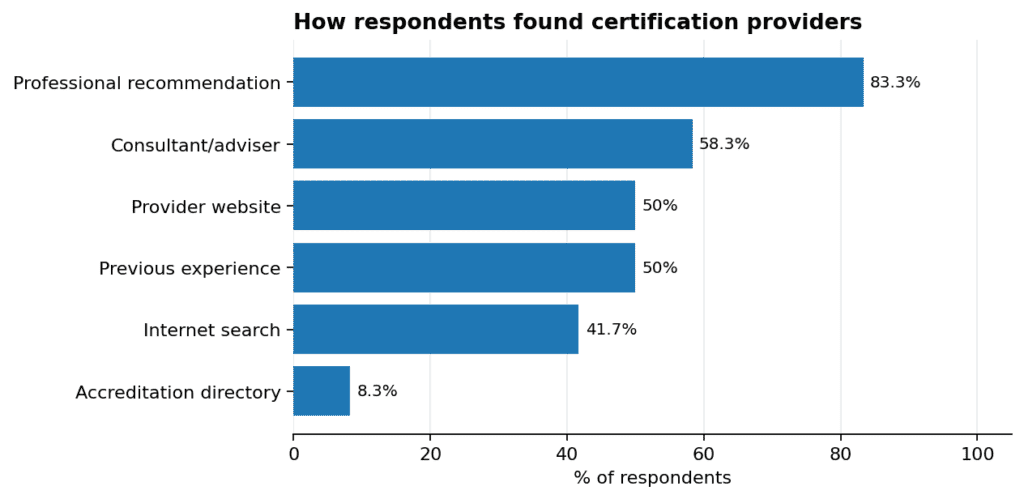
Figure 1. Sources used to identify certification providers. Multiple sources could be selected.
What matters in the final choice?
Service quality and communication stood out: all respondents rated this very or extremely important. Accreditation and auditor competence/continuity each received a combined very/extremely important rating of 83.4%. Reputation was rated highly by 75.0%, while total cost was rated highly by 66.6%.
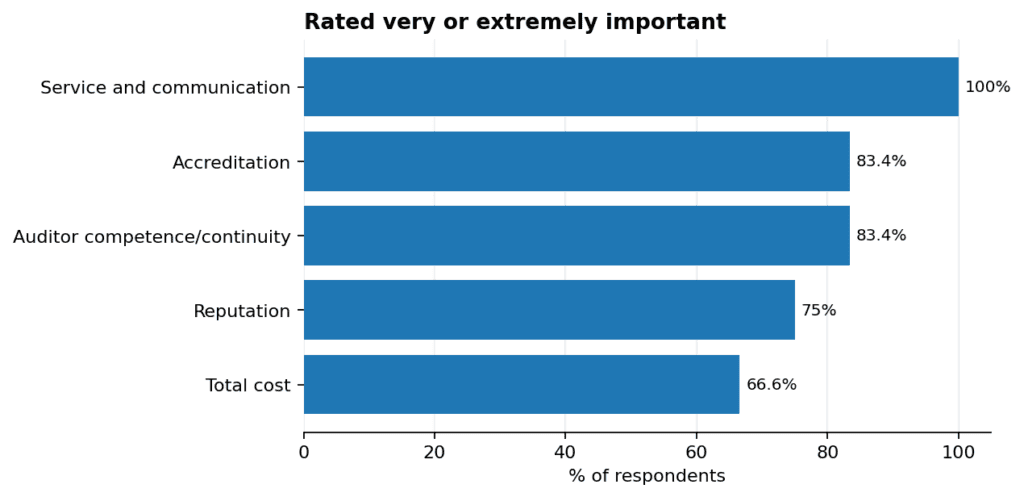
Figure 2. Factors rated very or extremely important.
When asked for the single greatest influence, price or total cost led at 25.0%. Provider reputation, accreditation and speed/availability each accounted for 16.7%, while 16.7% did not identify one single factor. This suggests several criteria may be considered essential, while a particular factor tips the final decision in an individual case.
4. UKAS awareness and familiarity
UKAS had the highest recognition among the named accreditation organisations: 83.3% had heard of UKAS, compared with 75.0% for IAF, 58.3% for ANAB and 25.0% for DAkkS.
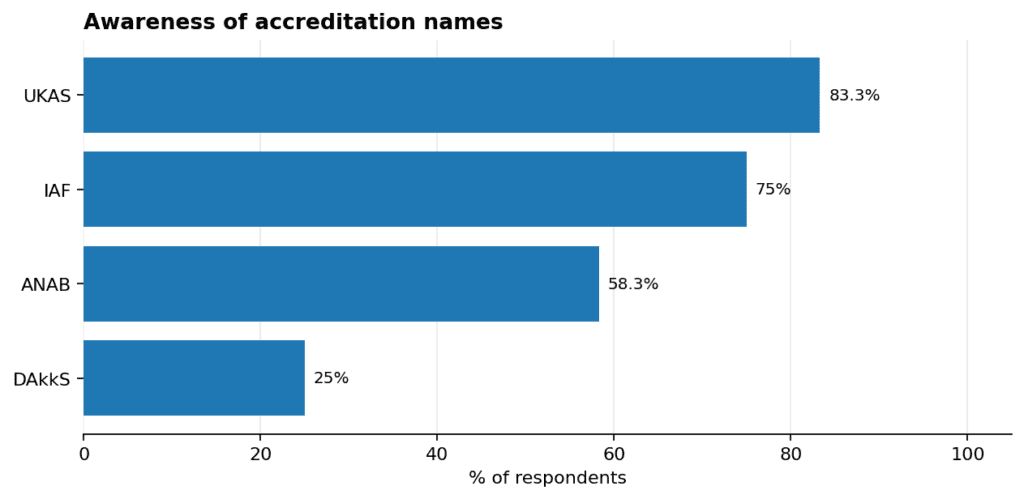
Figure 3. Respondents who had heard of each named organisation.
Three-quarters agreed or strongly agreed that they recognised UKAS more readily than accreditation bodies based outside the UK. In addition, 83.3% agreed that a familiar accreditation name makes certification easier to trust. The source also reports that 75.0% agreed customers may be less likely to accept certification if they do not recognise the accreditation body.
Familiarity with international recognition was more limited: 50.0% described themselves as moderately familiar, 25.0% as slightly familiar, 16.7% as very familiar and 8.3% as not at all familiar.
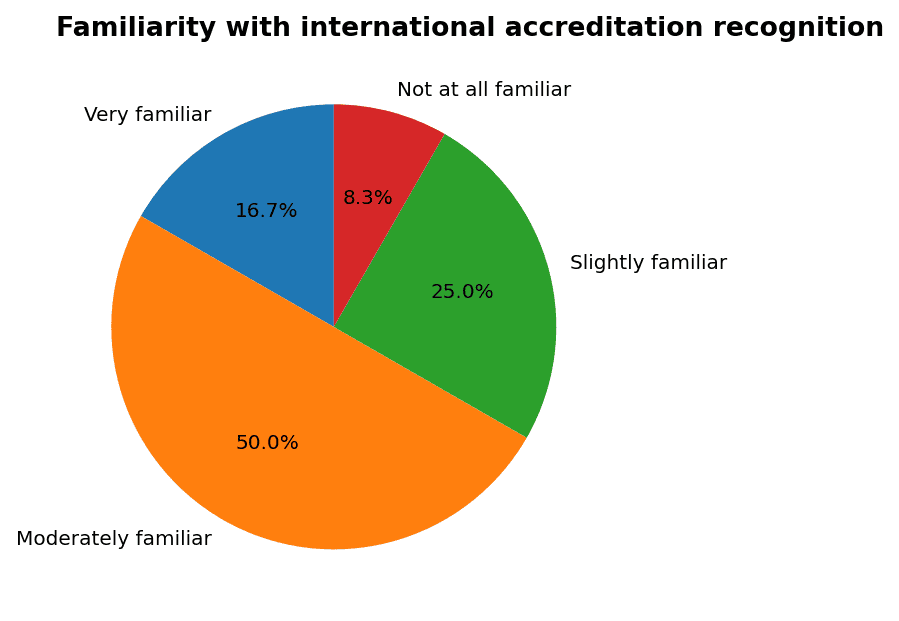
Figure 4. Self-reported familiarity with recognition between accreditation bodies in different countries.
5. Preference before and after an explanation
When respondents compared providers with equal price, service, sector experience and availability, 91.7% initially preferred the UKAS-accredited provider. After further information about international accreditation, 75.0% still preferred UKAS. A further 8.3% preferred the other recognised national accreditation body, while 16.7% had no preference.
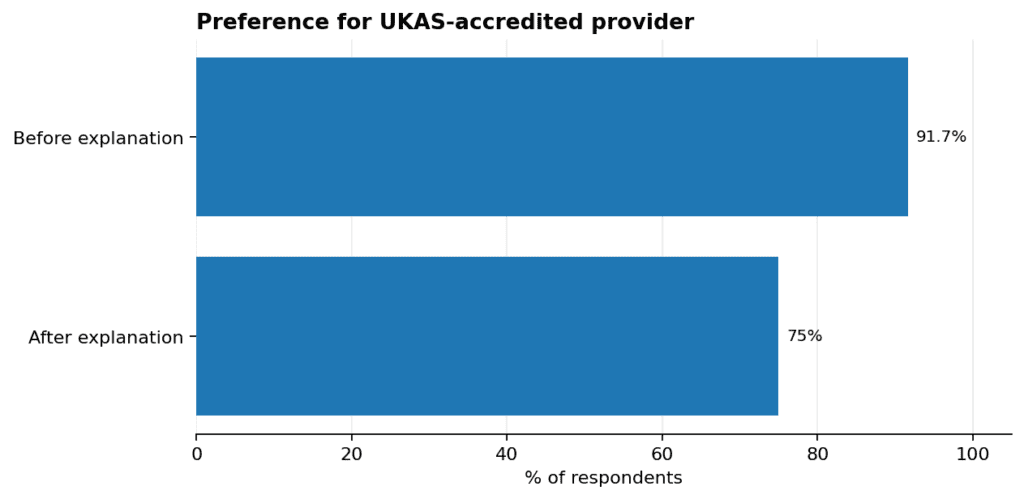
Figure 5. Preference for a UKAS-accredited provider before and after explanatory information.
The change mainly reflected a reduced exclusive preference for UKAS rather than a direct switch to an alternative. The source reports that 41.7% said the explanation changed their view (8.3% a lot and 33.3% a little), 50.0% said it did not and 8.3% were unsure. Among those explaining why they still preferred UKAS, 41.7% cited familiarity; 33.3% said the information increased their confidence in internationally recognised accreditation; 16.7% wanted more evidence about recognition and scope; and 8.3% said accreditation would not determine their choice.
The findings suggest that explanation can improve understanding and create some neutrality, but may not on its own overcome the advantage of a familiar accreditation name.
6. Understanding international recognition
Before the explanation, responses about acceptance in the UK were mixed. The source reports that 50.0% selected the view that certification associated with another country’s recognised accreditation body can also be accepted in the UK; 25.0% said acceptance depends on the specific body, scope and intended use; 16.7% believed only UKAS-accredited certification is recognised; and 8.3% did not know.
After reading the information, 91.7% correctly identified that a buyer should check both the accreditation body and the relevant scope. The source reports that 75.0% found the explanation clear, including 50.0% who described it as very clear and 8.3% as extremely clear.
Understanding the principle is not necessarily the same as feeling confident enough to select a less familiar accreditation route. Buyers may need clear, repeated information and evidence that they can verify independently.
7. Trust and the role of accreditation
The results showed that 75.0% expressed a great deal or complete trust in UKAS-accredited certification. For certification accredited by another national accreditation body recognised through an international arrangement, 25.0% expressed a great deal of trust and 50.0% some trust. For certification without recognised accreditation, 50.0% reported no trust at all and only 8.3% a great deal of trust.
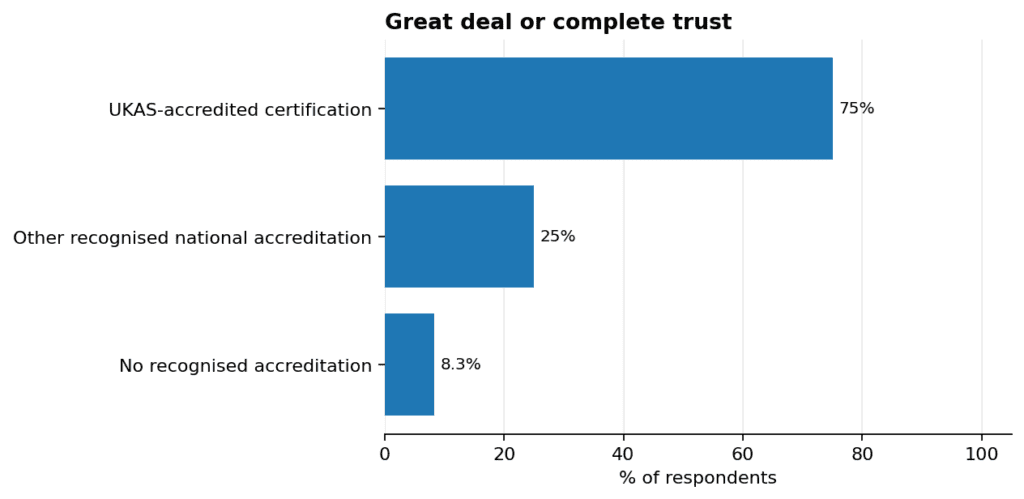
Figure 6. Share expressing a great deal or complete trust in each scenario. The source gives partial breakdowns for some categories; verify these figures against the raw responses before publication.
The report states that 70.0% said accreditation was checked during the provider decision, including 58.3% who checked personally and 16.7% who said someone else checked. A particular accreditation was reportedly required by a customer, contract, regulator, industry scheme or internal policy for 58.3%.
These findings should not be interpreted as showing that UKAS accreditation is universally required, or that non-UKAS accreditation is automatically unsuitable. The relevant accreditation body’s status, the scope covered and the intended use of the certificate all matter. Buyers should also check their own customer, contractual, regulatory and tender requirements.
8. What evidence do buyers want?
Respondents valued information that helps them verify accreditation for themselves. Clear confirmation of accredited scope was rated very or extremely useful by 91.7%. A plain-language explanation of accreditation received the same combined rating from 83.3%. Guidance on identifying questionable certification was rated highly by 75.0%.
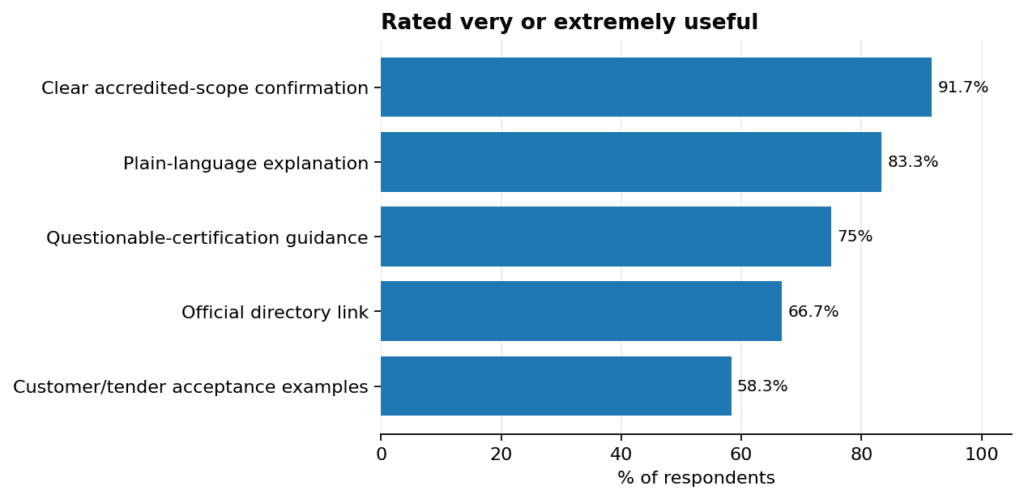
Figure 7. Information and tools rated very or extremely useful.
The source also reports that 66.7% rated a link to an official directory very or extremely useful, while 58.3% valued examples of customer or tender acceptance. Open-ended responses mentioned greater promotion by international accreditation bodies and common accreditation badges (55.6%), as well as customer reviews and evidence of global business presence (44.4%). These open-ended percentages may use a different denominator and should be checked before publication.
9. Implications for certification bodies
Make accreditation information easy to find
Show the accreditation body, current status and relevant scope clearly on websites, proposals and supporting documents.
Explain recognition in plain English
Avoid relying on technical terms or saying “internationally recognised” without explaining what it means and how buyers can verify it.
Provide evidence, not just reassurance
Link to official directories and make scope documentation easy to access, so buyers can check claims independently.
Address customer and tender acceptance
Help prospective clients identify whether their own contracts, customers, regulators or schemes specify a particular accreditation.
Equip sales and client-facing teams
Ensure teams can explain the accreditation route accurately and consistently, including where to find authoritative verification.
Build familiarity over time
Use consistent explanations, visible accreditation information and relevant client examples to reduce uncertainty.
10. Limitations and interpretation
- The sample contains only 12 respondents. One response represents approximately 8.3 percentage points, so small changes in counts can materially alter percentages.
- The survey is exploratory and is not a representative measure of all UK certification buyers.
11. Conclusion
The survey suggests that UKAS benefits from a strong familiarity advantage among the respondents. That familiarity appears to influence confidence and provider preference, even when other aspects of the service are presented as equal. Information about international recognition improved understanding and reduced the proportion who exclusively preferred UKAS, but most respondents still favoured the familiar accreditation name.
The findings also point to a practical opportunity for certification bodies. Buyers value clear scope information, straightforward explanations and evidence they can verify. For providers whose accreditation is less familiar to UK buyers, communicating recognition clearly and making supporting evidence accessible may help reduce uncertainty and support more informed comparisons.
The central message is not that buyers should choose one accreditation route over another. It is that certification bodies need to help buyers understand what sits behind a certificate, how its accreditation can be checked, and whether it meets the requirements relevant to their organisation.
Appendix: selected figures
| Measure | Result |
| Had heard of UKAS | 83.3% |
| Had heard of IAF | 75.0% |
| Had heard of ANAB | 58.3% |
| Had heard of DAkkS | 25.0% |
| Initially preferred UKAS when other factors were equal | 91.7% |
| Preferred UKAS after explanatory information | 75.0% |
| Very familiar with international recognition | 16.7% |
| Identified need to check body and scope after explanation | 91.7% |
| Rated clear scope confirmation very/extremely useful | 91.7% |
| Rated plain-language explanation very/extremely useful | 83.3% |
| Rated service and communication very/extremely important | 100.0% |
| Rated accreditation very/extremely important | 83.4% |
| Used professional recommendations to identify providers | 83.3% |
| Said a particular accreditation was required | 58.3% |
Source: Poll Fish Survey: UK Certification Buyers’ Attitudes Towards Non-UKAS Accreditation by Assent Risk Management

